- What Radon Actually Is
- Why Radon Is Dangerous
- Why Minnesota and Hennepin County Test High
- How Radon Enters a Bloomington Home
- How Professional Radon Testing Works
- Understanding the EPA Action Level of 4.0 pCi/L
- What to Do If Your Levels Are Elevated
- Why Radon Levels Vary From House to House
- Testing During a Real Estate Transaction
- Short-Term Versus Long-Term Testing
- Retesting After Mitigation
- Radon and Finished Basements
- Common Radon Myths
What Radon Actually Is
Radon is a naturally occurring radioactive gas produced by the slow decay of uranium and radium found in soil and rock. Because uranium is present in trace amounts almost everywhere in the earth, radon is constantly being generated beneath the ground we live on. Outdoors it disperses harmlessly into the open air, but indoors it can accumulate to concentrations that pose a real health risk over time.
What makes radon difficult to think about is that it engages none of our senses. It is completely colorless, odorless, and tasteless, so a home with dangerously high levels feels and smells exactly like a home with low levels. There is no musty odor, no visible haze, and no symptom you will notice today. The only way to know your level is to measure it.
Radon is measured in picocuries per liter of air, abbreviated pCi/L. This unit describes how much radioactive decay is happening in a given volume of air. The higher the number, the more radon is present and the greater the long-term exposure risk to everyone living in the home. Understanding this single number is the foundation of every decision a homeowner makes about radon.
Why Radon Is Dangerous
When radon gas decays, it produces tiny radioactive particles sometimes called radon progeny or radon decay products. As you breathe, these particles can lodge in the lining of your lungs, where they continue to release small bursts of radiation. Over years of exposure, that radiation can damage lung tissue and the genetic material inside lung cells, which is how radon raises the risk of cancer.
Radon is recognized as the second-leading cause of lung cancer overall and the number one cause among people who have never smoked. For smokers, the risk is even more pronounced, because radon exposure and tobacco smoke compound one another. This combination makes radon a serious concern for households of every kind, not only for people who already consider themselves at risk for lung disease.
The danger from radon is cumulative rather than immediate. There is no acute illness, no rash, and no warning symptom that signals a high level. Instead, the risk builds quietly over many years of breathing elevated air, which is precisely why public health agencies emphasize testing. You cannot react to a threat you cannot perceive, so measurement is the only protection.
Why Minnesota and Hennepin County Test High
Minnesota sits on geology that is naturally rich in the uranium-bearing soils and glacial deposits that generate radon. The state was shaped by ancient glaciers that ground up and redistributed mineral-rich rock across the landscape, leaving behind soils that readily produce radon gas. As a result, elevated indoor radon is common throughout the state rather than being a rare or isolated problem.
The Minnesota Department of Health reports that radon is found at elevated levels in homes across every county, and it recommends that every home in the state be tested regardless of age, style, or location. Hennepin County, which includes Bloomington, is no exception. Homes here sit on the same general soil profile that drives high readings throughout the metro area and greater Minnesota.
Minnesota's climate intensifies the issue. Long, cold winters mean homes are sealed tightly and heated for many months of the year, and warm indoor air rising through the house creates a slight vacuum that pulls soil gas, including radon, up through the foundation. This seasonal stack effect is one reason Minnesota homes can show some of their highest readings during the heating season.
How Radon Enters a Bloomington Home
Radon moves from the soil into a house because of a pressure difference. The air inside a heated home is generally warmer and at slightly lower pressure than the soil gas beneath the foundation, and that difference acts like a gentle suction, drawing radon-laden air upward through any available opening in the slab and foundation walls.
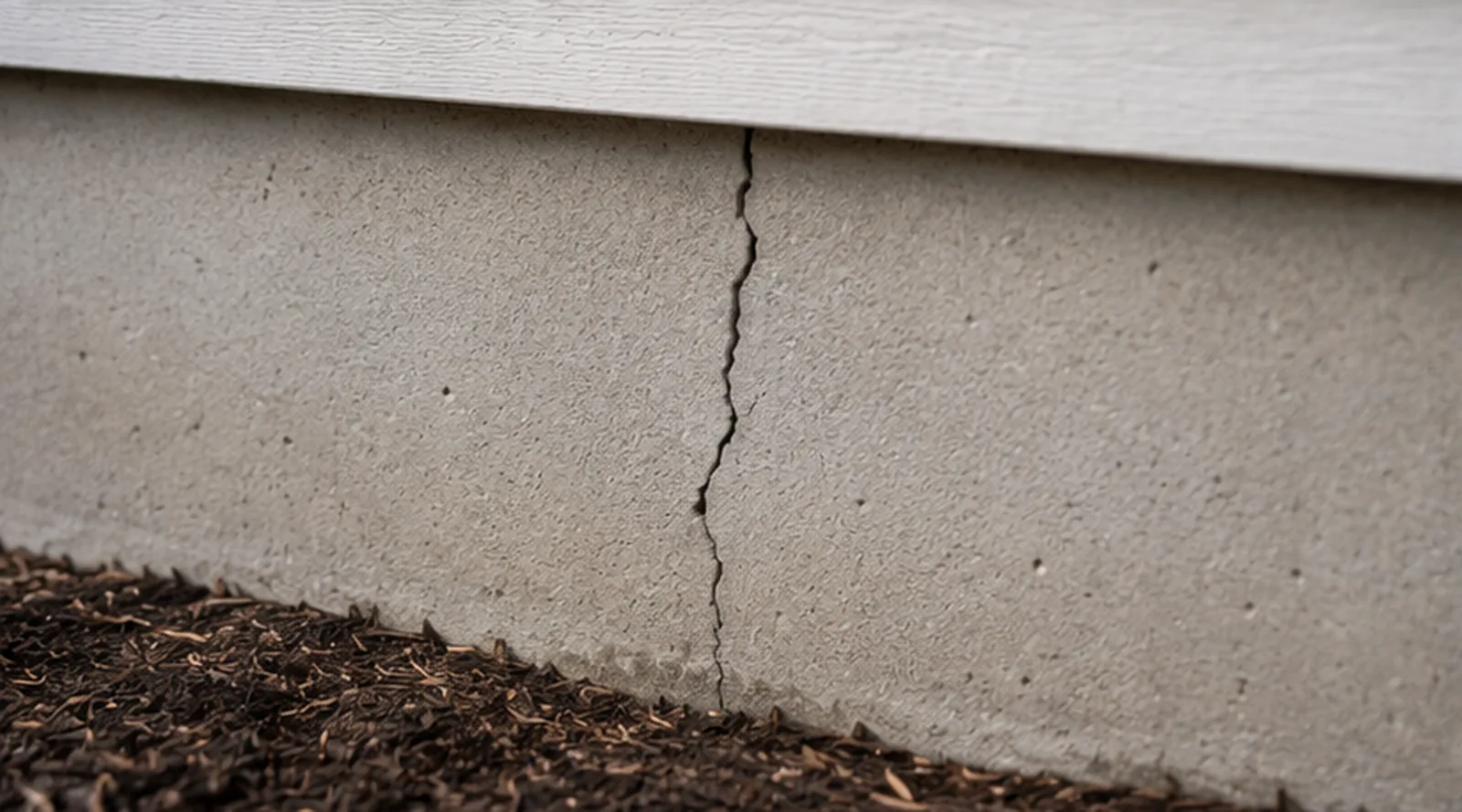
Those openings are more numerous than most homeowners realize. Radon can enter through cracks in concrete floors and walls, through control joints, around plumbing and utility penetrations, through sump pits and floor drains, and through the porous spaces in concrete block walls. Even a foundation that looks solid and dry to the eye can have more than enough pathways to allow significant radon entry.
Because the gas enters from the ground up, the lowest levels of the home typically accumulate the most radon. A basement, especially one in regular use, tends to show higher readings than upper floors. This is why testing focuses on the lowest livable level and why the design of a home's foundation has such a strong influence on its radon profile.
How Professional Radon Testing Works
A professional radon test centers on placing a measuring device in the right location and letting it run undisturbed for a set period. Many inspectors use a continuous radon monitor, an electronic instrument that samples the air repeatedly and records readings hour by hour. This produces an average concentration along with a record of how the level changed over the testing window.
The standard short-term test runs for a minimum of 48 hours. During that time, the home should be kept under closed-house conditions, meaning windows and exterior doors stay shut except for normal entry and exit. Closed-house conditions help the test reflect the way radon naturally builds up in a lived-in home rather than being diluted by open windows and cross ventilation.
Placement matters as much as duration. The device is set on the lowest level of the home that is or could reasonably be lived in, positioned away from drafts, exterior walls, windows, and sources of moisture or heat that could skew the reading. A continuous monitor also helps identify whether closed-house conditions were disturbed, which adds confidence that the final number truly represents the home.
Understanding the EPA Action Level of 4.0 pCi/L
The Environmental Protection Agency has established an action level of 4.0 pCi/L. When a home tests at or above this concentration, the EPA recommends taking action to reduce the radon level. This figure is the single most important benchmark a Bloomington homeowner needs to understand when reading a radon report.
It is important to recognize that 4.0 pCi/L is a guideline for action, not a sharp line between safe and dangerous. Radon risk exists on a continuous scale, and there is no concentration that is considered completely free of risk. The EPA notes that exposure below the action level still carries some risk, and many homeowners choose to consider reducing levels that fall in the range just beneath 4.0 as well.
When you read your results, focus on where the average lands relative to that benchmark. A result at or above 4.0 pCi/L signals that mitigation is recommended. A result below it does not mean radon is absent, only that it falls under the threshold at which action is formally advised. Either way, knowing the number lets you make an informed decision rather than guessing.
What to Do If Your Levels Are Elevated
If your home tests at or above the action level, the good news is that radon is a solvable problem. Elevated radon does not mean a house is unsafe to own or that the foundation is defective. It simply means soil gas is finding its way inside and needs to be redirected, which is a routine and well-established repair handled by professionals who specialize in this work.
The most common and effective solution is a system called sub-slab depressurization. In this approach, a pipe is installed through the foundation slab and connected to a continuously running fan that draws radon out from beneath the home and vents it safely above the roofline. By creating lower pressure under the slab than inside the house, the system intercepts radon before it can enter the living space.
This kind of mitigation should be performed by a licensed radon mitigation installer. In Minnesota, radon professionals operate under state licensing requirements, and using a properly credentialed installer helps ensure the system is designed, sized, and sealed correctly. A well-built system runs quietly in the background and reliably keeps radon at a fraction of its original level.
Free Instant Quote
Know your inspection cost in less than 30 seconds. No obligation.
Why Radon Levels Vary From House to House
One of the most common surprises for homeowners is learning that a high radon reading next door says very little about their own home. Two houses on the same street, built in the same era by the same builder, can return dramatically different results. Radon is intensely local, shaped by the specific conditions of each individual property.
Several factors drive this variation. The exact composition of the soil directly beneath a foundation, the number and size of entry points in the slab and walls, the type of foundation, how tightly the home is sealed, and how the heating and ventilation systems move air all influence the final reading. Small differences in any of these can push one home above the action level while its neighbor stays below.
This is the central reason that every home must be tested on its own. You cannot rely on a neighbor's result, a previous owner's old report, or a general assumption that a newer or well-built home must be fine. The only way to know a specific home's radon level is to measure that specific home under proper testing conditions.
Testing During a Real Estate Transaction
Radon testing comes up often during the sale of a Bloomington home, and the dynamics are different from testing a house you already own. During a transaction, a buyer typically orders a radon test as part of the inspection period, frequently alongside the general home inspection, so that the result can inform negotiations before closing.
Real estate radon tests place extra emphasis on test integrity because the result can carry financial weight. Closed-house conditions need to be maintained throughout the measurement, and the device should be positioned where it cannot be easily disturbed. Using a continuous radon monitor is especially valuable here, because its hourly data can reveal whether a window was opened or the test was otherwise tampered with during the measurement window.
Minnesota has specific disclosure requirements surrounding radon in real estate transactions, designed to make sure buyers receive information about radon and any known testing or mitigation. Whether you are buying or selling, treating the radon test as a standard part of the process, rather than an optional add-on, protects everyone involved and keeps the result credible.
Short-Term Versus Long-Term Testing
Radon tests fall into two broad categories defined by how long they run. Short-term tests last from two to roughly ninety days, with the common professional version running 48 hours. They are fast and well suited to situations where a timely answer is needed, such as a real estate transaction or an initial screening of a home you have just moved into.
Long-term tests run for more than ninety days, often spanning several months or longer. Because radon levels fluctuate from day to day and season to season, a long-term test captures a more representative annual average. It smooths out the spikes and dips that a short two-day window might happen to catch, giving a fuller picture of true year-round exposure.
Neither approach is wrong; they serve different goals. A short-term test answers the question quickly and is the practical choice when decisions cannot wait. A long-term test is ideal for a homeowner who wants the most accurate long-run understanding of their exposure. A common strategy is to begin with a short-term test and follow up with a long-term test when the short-term result is near the action level.
Retesting After Mitigation
Installing a mitigation system is not the final step; confirming that it works is. After a sub-slab depressurization system is installed, the home should be retested to verify that radon has actually dropped to an acceptable level. A reputable installation process treats this follow-up measurement as an essential part of the job rather than an afterthought.
This confirmation test is usually performed after the new system has been running for a short stabilization period, again under closed-house conditions on the lowest livable level. The goal is to document that the system has brought the radon concentration well below the action level and ideally as low as reasonably achievable, giving the homeowner clear proof of success.
Even after a system passes its initial confirmation, periodic retesting is wise. Public health guidance generally recommends testing every couple of years and after any major change to the home, such as a renovation, foundation work, or a significant alteration to the heating and ventilation system. A mitigation fan also has a working lifespan, so ongoing attention keeps long-term protection intact.
Radon and Finished Basements
Finished basements deserve special attention in Bloomington, where many homeowners convert lower levels into family rooms, bedrooms, home offices, and play areas. Because radon enters from the ground and concentrates on the lowest level, a finished basement is often the very space where people spend significant time while also being where radon tends to be highest.
Finishing a basement can also change its radon behavior. New walls, flooring, and ceilings may cover the cracks and penetrations through which radon enters, which can make entry points harder to see but does not seal them in any reliable way. In some cases, changes to airflow and sealing during a remodel can even shift the radon level in the space, sometimes upward.
If you have a finished basement or are planning to finish one, testing is especially important both before and after the work. Knowing the radon level helps you decide whether to address it as part of the project, when the foundation is most accessible. Anyone using a lower-level bedroom or spending daily hours in a finished basement has good reason to confirm the air there is safe.
Common Radon Myths
A persistent myth is that radon is only a problem in certain regions or in old homes. In reality, elevated radon has been found in new and old homes, large and small, on every type of lot throughout Minnesota. A brand-new, energy-efficient home can test high just as easily as a decades-old one, because tight construction can actually trap soil gas indoors.
Another myth is that a home with no basement, or one built on a slab, is safe from radon. Radon can accumulate in homes of every foundation type, including slab-on-grade and crawl space designs, because the gas enters wherever the structure meets the soil. The presence or absence of a basement changes the details, not the underlying need to test.
Homeowners also sometimes assume that a single clean test settles the question forever, or that opening windows is a permanent fix. Radon levels change over time with weather, seasons, and home modifications, so periodic retesting is wise. Ventilation may lower readings temporarily, but it is not a substitute for a properly engineered mitigation system when levels are truly elevated.